
Quick Extender Review: The Shortcut That Sent Me Looking for a Urologist
I bought the Quick Extender Pro because I thought I was being smart—saving money, saving time, and skipping the heavy metal contraptions that looked like props from a medieval museum. The marketing promised “double strap support,” “no‑slip comfort,” and “clinical‑grade traction you can trust.” I figured I’d done enough homework to justify the purchase, so I clicked Add to Cart after skimming one glowing Quick Extender review too many. I told myself I’d ramp up slowly, track my progress, and bail at the first sign of trouble. Spoiler: I didn’t bail soon enough. Two weeks later I was sitting in a urologist’s office, pants folded neatly on a plastic chair, explaining how an $ xxx device managed to leave my most sensitive real estate swollen, bruised, and half‑numb.
The Not‑So‑Obvious Red Flags I Missed
Let me back up. I’m not new to self‑improvement gadgets—fitness trackers, posture braces, even a standing desk that now doubles as a hat rack. Extenders felt like the next logical “quiet upgrade.” Quick Extender Pro reeled me in with:
- Price: somewhere between “budget” and “premium” but still cheaper than the fancy gold‑plated ones.
- Dual Strap Pitch: two silicone nooses supposedly spread the pressure evenly.
- “360° Pivot”: looked futuristic in the promo videos.
- Aggressive Before‑and‑Afters: you know, the ones where lighting does half the work.
I rationalized that something this popular had to be pretty safe if I followed the instructions.
Opening the Box and Fooling Myself
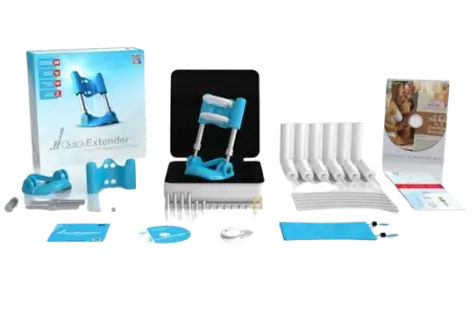
The kit arrived in a discreet cardboard box—which immediately felt like a win. Inside: the extender (chrome‑finished rods, lots of plastic joints), two sets of silicone straps, a foam pad, tension springs, and a mini ruler printed with millimeter markings suspiciously optimistic about future gains. Everything looked shiny and “engineered,” the way knock‑off phone accessories do—fine at a glance, flimsy when you twist them a little.
Still, I felt confident. I set up the extender, attached the smallest rods, wrapped on the foam pad, slid the straps into place, and—after a moment’s hesitation—buckled in for my maiden voyage.
Week One: The Subtle Ache I Ignored
Day one: forty‑five minutes at the lowest tension. Mild pressure, nothing scary. Day two: an hour, same tension. I noticed a faint pinch where the rear strap dug into the underside, but I chalked it up to user error. By day four, I was clocking ninety minutes. That pinch turned into a dull ache, like someone stashed a rubber band under my skin.
I swapped the strap positions, layered the foam, and even looped a strip of gauze for extra cushion. The ache stayed. Sometimes it flared into a quick sting when I shifted in my chair. Still, I convinced myself it was “adaptation pain” and kept going.
Week Two: When Adaptation Became Injury
The manufacturer’s guide suggested I could increase tension after the first week. Brilliant, I thought—more traction, faster gains. I cranked the rods two notches, sat back down at my desk, and tried to forget it.
Fifteen minutes in, I felt a sudden sharp twinge right where the strap met the shaft. I loosened everything, but the damage was done. A narrow purple line had formed, as if a string had been tied too tight. There was mild swelling and a pins‑and‑needles sensation creeping toward the tip. I slapped on some aloe, took the rest of the day off, and told myself I’d try again tomorrow with more padding.
Tomorrow never came—because overnight the swelling got worse. By morning, the skin beneath that purple line looked puffy and angry, and I could barely coax a partial erection without discomfort. That’s when the anxiety kicked in.
The Google Spiral and the Terrifying “What If”
You know those late‑night WebMD panics? Multiply that by ten when the search term includes words like “numbness” and “penile.” Forums were divided: half the guys said “just rest, it’ll clear up,” and the other half advised booking a doctor yesterday. One post mentioned potential nerve impingement from “double noose” extenders if the tension isn’t perfectly balanced. Guess which design Quick Extender Pro flaunts on its homepage?
At 3 a.m., self‑diagnosis turned into self‑preservation: I scheduled an urgent urology appointment.
The Doctor Visit I Hoped I’d Never Need
Explaining my situation felt like confessing I’d super‑glued my hand to the TV remote. The doctor kept a straight face, asked about session length, tension, and pain scale, then examined the damage. Verdict: localized nerve irritation and mild vascular compression—thankfully no tearing or permanent nerve loss, but enough trauma to warrant ice, anti‑inflammatory meds, and a strict two‑week “hands‑off” order.
He pointed out that the dual‑strap design can increase the risk of uneven pressure if the straps aren’t identical lengths or if the rods pivot at odd angles. Add higher tension too soon, and it’s like cinching a zip‑tie around a garden hose.
The Aftermath: Ice Packs and Buyer’s Remorse
Recovery wasn’t dramatic; it was just slow, boring, and full of second‑guessing. For the first week I shuffled around like I’d pulled a groin muscle, afraid to sit on hard chairs. Erections were tentative: more discomfort than pleasure. The numb tingling faded by day ten, replaced by an ache that reminded me exactly where the strap had bitten in.
I’d planned to measure gains every Sunday. Instead, I measured patience—counting days until I felt normal again. Newsflash: no measurable gains come from two weeks of cold packs and ibuprofen.
Lessons I Wish I’d Learned Before I Swiped My Card
- Comfort First: If the base design feels wrong in the first ten minutes, it will never feel right at hour two.
- Tension Is Tricky: Without a precise gauge, “two turns” on a rod could be double what your tissue can handle.
- Dual Straps, Dual Trouble: Twice the contact points mean twice the chance of uneven compression.
- Instruction Books Lie by Omission: They mention “possible discomfort,” not “purple indentations that make you wonder if you’ll ever function normally again.”
- Cheaping Out Costs More: The doctor visit and meds outpriced the “premium” extender I’d skipped to save thirty bucks.
Will I Ever Try an Extender Again?
Maybe—but only after obsessing over comfort systems, tension readouts, and actual clinical backing instead of flashy marketing lines. I’d look for soft cradle designs, measured traction springs, and customer support that doesn’t vanish after your thirty‑day return window.
Quick Extender Pro might work for some people who have iron skin and infinite patience. For me, it was an expensive detour into Do‑Not‑Repeat territory.
Closing This Quick Extender Review on a Real‑Talk Note
If you stumbled onto this Quick Extender review hoping to confirm your decision to buy, I’m not here to tell you how to spend your money—just how I spent mine and ended up icing a body part that should never need icing. I wanted a modest confidence boost; I got a hard lesson in ignoring pain signals and trusting flashy product pages over my own common sense.
Could I have avoided the injury by ramping tension even slower? Possibly. But a well‑designed device shouldn’t punish you for following its own beginner settings. The moment a tool risks numbness, bruising, or a panicked doctor visit, it stops being “self‑improvement” and starts being self‑harm.
Take it from the guy who had to explain to a medical professional why his weekend plans involved duct‑taping ice packs to his lap: sometimes the quick solution is the one that sets you back the farthest. Spend the extra money, read the boring safety manuals, and—most importantly—stop the moment your body says, “Hey, maybe don’t.”
Your future self (and your future doctor’s bill) will thank you.